
The Patriots at Pick 31: A Full 2026 NFL Draft Blueprint for Mike Vrabel and Eliot Wolf
Published two days before the 2026 NFL Draft kicks off in Pittsburgh
4/21/202614 min read
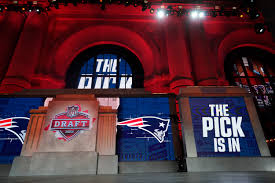
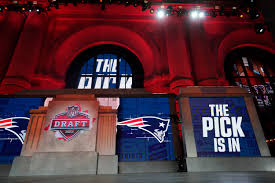
For the first time since the back end of the dynasty era, the New England Patriots enter draft week as champions of nothing but momentum — and that's still a remarkable place to be. A 14-3 regular season, an AFC title, and a 29-13 Super Bowl LX loss to Seattle has the Pats picking 31st overall. Drake Maye finished 2nd in MVP voting. Mike Vrabel won Coach of the Year in his debut season. The 2025 draft class, headlined by LT Will Campbell and C Jared Wilson, was at the cornerstone of a rebuilt offensive front. This is no longer a rebuild. It's a roster trying to finish what it started.
The 2026 board, however, doesn't quite cooperate with that ambition. It's a thin class at the top — Indiana's Fernando Mendoza is the only quarterback most evaluators agree on as a Round 1 talent, and the consensus across draft analysts is that the elite-tier prospect pool is shallow. That's actually good news for the Pats picking at 31, because the gap between pick 20 and pick 60 is smaller than usual, and Wolf has been telegraphing for weeks that the Patriots are open to moving up or down.
Let's break down the landscape, the trade winds, and a full eleven-player mock for what New England should do across three days in Pittsburgh.
The A.J. Brown Trade Cloud Hovers Over Everything
Before we get to a single college tape evaluation, we have to address the elephant on Route 1: A.J. Brown. As of Monday, ESPN's Adam Schefter reported that a trade sending Brown from Philadelphia to New England is "likely" to happen on or after June 1, with the timing driven entirely by salary cap mechanics. According to the report, the Eagles would absorb a $40M cap hit on the trade and need the post-June 1 designation to spread it across 2026 and 2027. The connection here is no mystery — Vrabel coached Brown in Tennessee, and the player reportedly wants out of Philadelphia.
Why does this matter for the draft? Two reasons. First, if New England is genuinely planning to acquire a true WR1 in six weeks, the urgency to spend a top-50 pick on a wide receiver diminishes. They can take the best receiver value when it presents itself — likely Day 2 or even early Day 3 — rather than reaching. Second, the compensation almost certainly involves future picks (2027 and/or 2028), since a post-June 1 trade can't include 2026 selections. So the eleven picks New England currently holds will all be made — none are getting shipped to Philadelphia this week.
Layered on top of that: the Patriots have been quiet but active on the smaller margins. Last fall they shipped Keion White to San Francisco and Kyle Dugger to Pittsburgh, picking up the 6th-round picks (198 and 202) that now pad their Day 3 inventory. Combined with the Josh Uche return from Kansas City (pick 191) and the Chicago compensatory selection (125), the front office has explicitly built optionality into Day 3. Eliot Wolf has acknowledged the Patriots will likely package some of those Day 3 selections to move up — and that's worth tracking on Friday and Saturday.
3 Players the Patriots Could Take at Pick 31
These are the three names I keep coming back to. One is the consensus "fit" pick. One is the BPA edge that scares teams off for non-football reasons. One is the trenches investment that buys long-term insurance against the Morgan Moses cliff.
Option 1: Cashius Howell, EDGE, Texas A&M
Howell is the cleanest fit on the board. He was one of the most productive pass rushers in college football in 2025, ranking near the top of the country in sacks while playing in the SEC. The traits jump off the screen: an explosive first step, the ability to threaten tackles around the arc with elite bend and corner-flatten, plus enough hand usage to deploy a real pass-rush plan rather than just running the loop. He also brings something New England hasn't had in years — legitimate coverage ability for an edge defender, with the awareness to drop into zone underneath and stay on top of tight ends and backs. For a Vrabel defense built on simulated pressures and pre-snap disguise, that's a meaningful bonus.
The hesitation, and the reason Howell could slide to 31 rather than going in the 20s, is physical. His 30.3-inch arm length is the shortest measurement for a pure edge rusher at the NFL Combine since 1999, an outlier that hurts his ability to disengage in the run game and limits his ceiling as a three-down player. He's listed at 6-foot-3, 245 pounds — undersized by traditional NFL edge standards — and evaluators worry he'll always be a negative against the run. The realistic NFL projection is a designated pass rusher who can earn three-down snaps over time but starts his career as a high-end situational weapon.
The Patriots fit is essentially perfect. As the Patriots' own draft analyst Evan Lazar has noted, Howell's profile mirrors current captain Harold Landry III almost exactly — speed-winner with bend, smart and motor-driven, slightly undersized. With Landry coming off an injury-plagued season and Dre'Mont Jones penciled in opposite him, adding Howell gives Vrabel a true rotational rusher with first-round juice and a clean schematic projection. The Patriots generated only 35 sacks last season, tied for seventh-fewest in the NFL, and Howell is among the best pure pass rushers in this class. If he's there at 31, the card should be in by minute three.
Option 2: Max Iheanachor, OT, Arizona State
If Wolf and Vrabel want to invest in long-term protection for Drake Maye rather than chase another front-seven body, Iheanachor is the pick. He's a raw, talented right tackle with an unusual backstory — he moved from Nigeria to Los Angeles at 13, played soccer and basketball growing up, and didn't begin playing football until junior college. The lack of mileage shows up in his technique, but it also means his ceiling is genuinely uncapped for a player who already tied for the second-fastest 40-yard dash among offensive linemen at the Combine at 4.91 seconds, with 33 7/8-inch arms and a 1.73-second 10-yard split. He didn't allow a sack in 2025 at ASU.
The weaknesses are exactly what you'd expect from a player who started organized football four years ago. He's late to punch and exposes his chest in pass protection, his hand placement is inconsistent, and he can be overpowered when his pad level rises. Some scouts believe he'll need a redshirt year before he's ready for full-time NFL snaps. PFF's evaluation captures the consensus: he possesses the physical tools of a starting-caliber tackle, particularly in zone schemes, but his technical inconsistency means his floor isn't as high as his ceiling. He's a developmental swing in the truest sense.
That said, the Patriots' situation is built for this exact archetype. Morgan Moses is 35, entering his 13th NFL season, and Vrabel has already hinted he'll be managed with a reduced workload in training camp. Drafting Iheanachor lets him spend 2026 as the swing tackle and inheriting starter, learning from one of the best technicians in the league. By 2027, he steps in as the starting right tackle on a rookie deal — exactly the kind of cost-controlled trench investment that lets you keep paying Drake Maye and Christian Gonzalez. It's no surprise Vrabel was personally involved at Iheanachor's pro day at ASU, jumping into scrums during drills. This is a known target.
Option 3: Akheem Mesidor, EDGE, Miami
Mesidor is the most interesting "what if he slides?" prospect on the board for New England. He's a true first-round talent on tape — he capped a six-year college career by helping Miami reach the College Football Playoff National Championship Game, posting 12.5 sacks, 17.5 tackles for loss, and four forced fumbles in 2025 while earning First-Team All-ACC honors. The skill set is more refined than just about any edge in this class. He's a true technician with a deep arsenal — speed-to-power, bull rush, push-pull, hand swipe, dip-and-rip, cross chop, ghost rush — and tempos his pass rush plan more like a fifth-year pro than a college senior. He also has the versatility to kick inside on passing downs, which Vrabel would love.
The two reasons he'll likely be available at 31 are age and durability. He turned 25 in early April, which limits his perceived ceiling for some teams, and he carries a lingering foot injury history that included surgery in 2024 and missing the majority of the 2023 season. The other knock: he's not a plus run defender, and he'll occasionally get washed when he can't win with quickness, with subpar strength against tackles who anchor well and a tendency to duck inside blocks. He's an EDGE2 who'll need a strong run-stopping partner — which the Patriots, with Landry and Jones, already have.
For a team picking at 31, the age concern is actually a feature rather than a bug. As Mel Kiper put it, if the Patriots are comfortable with the durability risk, they could absolutely use his production — Mesidor could quickly become a feared disrupter in the AFC East. Howell is the safer "designated rusher" projection. Mesidor is the bet on a more polished player who can immediately start games at edge while contributing as an interior rusher in sub packages. If you trust the Hurricanes coaching staff who voted him captain and trust the Combine medicals, he's a high-floor, high-impact pick.
The Full 2026 New England Patriots Mock Draft (11 Picks)
What follows is one cohesive scenario — the projected pick at each slot, built around the Howell selection at 31, the assumption that an A.J. Brown trade is coming, and the stated needs at edge, OL, LB, and TE.
Round 1, Pick 31 — Cashius Howell, EDGE, Texas A&M
See full three-paragraph analysis above. The TL;DR: he's the closest thing to a plug-and-play fit on the board for New England's pass-rush and Vrabel's scheme, with a Landry-comparable projection and elite production against SEC competition.
Round 2, Pick 63 — Oscar Delp, TE, Georgia
Delp is the tight end most directly connected to New England this cycle, with the Patriots hosting him on a pre-draft visit. He's the modern hybrid pass-catcher Vrabel said he was hunting for — 6-foot-5, 245 pounds, with a 4.49 40 at Georgia's pro day after a hairline foot fracture kept him out of Combine workouts. He spent four seasons at Georgia in a notoriously crowded tight end room, finishing his college career with 70 receptions for 854 yards and nine touchdowns across 55 games. The film shows a fluid route-runner with natural hands and the speed to threaten the seam, exactly the profile that's missing behind Hunter Henry.
The weaknesses are tied to the production limits. He didn't put up huge numbers in college because of Georgia's offensive structure and depth chart, which makes his evaluation more of a projection of his ceiling than a proven track record. His blocking, particularly in-line at the point of attack, is still under construction — he can be moved at the line of scrimmage and needs to add functional strength to play every down in a run-first set. Some teams have him as a pure "F" tight end rather than a complete Y, which limits his snap count early.
The fit in New England is layered. Hunter Henry enters the final year of his contract, and Henry's contract structure makes a 2027 departure increasingly likely. Julian Hill was signed as the run-blocking complement, which means there's a clear runway for a pass-catching tight end to develop behind Henry in 2026 and inherit the lead role in 2027. Vrabel publicly emphasized adding a tight end from this class. Delp has been to Foxborough on a 30 visit. The dots connect themselves. He'd give Drake Maye a third-down chain-mover and red-zone target on a rookie deal through 2029.
Round 3, Pick 95 — Jacob Rodriguez, LB, Texas Tech
Strengths: Elite splash-play producer — posted 13 forced fumbles, 25.5 tackles for loss, and six interceptions across his college career. Plays bigger than his frame, attacks downhill with violent intentions, and has the production profile of a player who could come off the board sooner than expected.
Weaknesses: Coverage range is tighter than ideal for a modern off-ball linebacker, and he can be exposed when asked to carry tight ends vertically. Tackle technique gets sloppy in space, and he'll need to clean up his angles to avoid missed tackles in the NFL.
Patriots fit: With Robert Spillane and Christian Elliss as the projected starters and depth scarce after Jack Gibbens, Tavai, and Mapu departed, Rodriguez immediately becomes the third linebacker and a core special-teams piece. Vrabel — a former All-Pro linebacker himself — values playmaking instincts above all at the position, and Rodriguez's 13-FF career screams "Vrabel guy."
Round 4, Pick 125 (from CHI) — De'Zhaun Stribling, WR, Ole Miss
Strengths: 6-foot-2, 207 pounds with a 4.36 40 and 55 career starts across stops at Washington State, Oklahoma State, and Ole Miss. Scouts have highlighted his blocking as among the best in this year's receiver class, with high-end production in the biggest games of his career.
Weaknesses: Older prospect with three different programs on the resume. Route tree is more limited than ideal — best work comes on slants, comebacks, and back-shoulder fades rather than as a true full-route-tree X. Drops on contested catches were inconsistent in his Ole Miss film.
Patriots fit: Stribling visited Foxborough on a 30 visit, and his profile fits exactly what New England needs as a complement to Doubs and (likely) A.J. Brown — a physical perimeter blocker who can handle dirty work in the run game and convert third downs underneath. If the Brown trade falls through, he becomes a more important target. If it goes through, he's an ideal WR4 with developmental upside.
Round 4, Pick 131 — Caleb Tierman, OT, Northwestern
Strengths: Senior Bowl participant with NFL size and length, and the kind of clean-tape production that fits a Patriots developmental approach to right tackle. Pass-pro grades steadily improved each year as a multi-year starter for Northwestern.
Weaknesses: Tested as a middling athlete at the Combine, which puts him below the trait threshold for some teams. Run-blocking power is functional rather than dominant. Likely a multi-year project before he sees real snaps.
Patriots fit: With Iheanachor or another tackle taken at 31, this is the second swing at the long-term Moses replacement. Tiernan's profile is exactly the kind of cost-controlled tackle depth Wolf has stockpiled in past drafts — useful as a swing tackle, with a path to a starting role by 2028 if he develops.
Round 5, Pick 171 — Dominique Orange, DT, Iowa State
Strengths: Massive interior anchor (6'5", 327 pounds) who profiles as a true 0/1-tech run-stuffer. Senior-year production saw him absorb double teams while freeing up the second level. The kind of run-down clogger who fills snaps Khyiris Tonga used to play.
Weaknesses: Pass-rush production is limited and likely always will be — he's a two-down player. Conditioning concerns on long drives, and his snap-count ceiling at the next level may sit around 35-40%.
Patriots fit: Direct replacement for Tonga's lost snaps next to Christian Barmore (assuming health) and Milton Williams. The interior DL class is weak overall this year, so getting any starter-caliber run defender on Day 3 represents value. Orange is exactly the type of trench player Wolf and Vrabel have prioritized in this Patriots regime.
Free Agents: What Got Done, What's Still on the Board
The headline signings this offseason were Alijah Vera-Tucker on a three-year, $42M contract to play left guard, and Dre'Mont Jones on a three-year deal to step in as the starting EDGE opposite Harold Landry III. Romeo Doubs was added at receiver. Kevin Byard came in on a one-year stopgap at safety after Jaylinn Hawkins walked. K.J. Britt was signed for linebacker depth. Julian Hill got a three-year deal as the in-line, blocking-first tight end behind Hunter Henry.
The departures sting more than the signings inspire. K'Lavon Chaisson and Anfernee Jennings both left at edge. Khyiris Tonga is gone from the interior. Austin Hooper was not retained at tight end. Stefon Diggs was released. Jack Gibbens, Jahlani Tavai, and Marte Mapu all departed at linebacker. The result is that even after free agency, three positions feel objectively under-resourced: edge rusher, linebacker, and offensive tackle (where Morgan Moses turns 36 in training camp and is on the final year of his deal). A fourth, tight end, is a Vrabel-stated priority — he announced at the league meetings that he wants to add one in the draft from a class he called "deep" at the position.
Among veterans still floating around the market who could plausibly alter draft strategy: edge rushers Za'Darius Smith and Matt Judon remain unsigned, and either could be a low-cost June addition that takes some pressure off needing to draft an immediate-impact rusher in Round 1. At linebacker, Eric Kendricks is still available. None of these veterans is a needle-mover, but each is the kind of insurance policy that allows the front office to draft for ceiling rather than reach for floor. The Patriots have not been heavily linked to any of them publicly, which suggests they're betting on the draft to fix the front seven.
Round 6, Pick 191 (from KC, Josh Uche trade) — George Gumbs Jr., EDGE, Florida
Strengths: Fascinating athletic profile — played both tight end and wide receiver before moving to defense, giving him intriguing size and movement skills as a converted edge rusher. Explosive off the line and has shown a willingness to learn and grind that scouts love.
Weaknesses: Raw across the board. Hand usage, pass-rush plan, and run defense are all years away from being NFL-caliber, and the production at Florida didn't match the traits. Could be a longer development project than typical Day 3 edges.
Patriots fit: A pure traits bet. With Landry on the back nine and Dre'Mont Jones already 28, the Patriots need young edge depth to develop, and Gumbs offers a high-ceiling swing for a 6th-round pick. Worst case, he's an athletic core special-teams contributor while he learns the position. Best case, he turns into a real rotational rusher by year two.
Round 6, Pick 198 (from SF, Keion White trade) — Maxwell Hairston, CB, Kentucky
Strengths: Long-armed boundary corner who tested well athletically. Plays with confidence in man coverage and has the recovery speed to stay attached to vertical routes. Late-round CB depth that fits the Patriots' pattern of finding contributors at the position.
Weaknesses: Inconsistent ball production despite the physical tools. Tackling effort can dip, and he'll lose route concentration when not challenged early in plays.
Patriots fit: With Christian Gonzalez, Carlton Davis III, and Marcus Jones as the top three, this is a depth-and-special-teams selection. Davis is on a short contract, so building cornerback depth on a rookie deal makes sense. Vrabel-style core ST contributor immediately.
Round 6, Pick 202 (from PIT, Kyle Dugger trade) — Emmett Johnson, RB, Nebraksa
Strengths: Compact, durable workhorse who carried the Cornhuskers in 2025 with 251 carries for 1,451 yards and 12 touchdowns — fourth in the FBS in rushing yards. Forced 93 missed tackles (4th nationally) and is a legitimate three-down weapon, with 85 receptions over the past two seasons (3rd among FBS RBs)
Weaknesses: 4.56 40-yard dash is below the elite athletic threshold for the position, which will cap his ceiling as a true home-run hitter. Average build at 5'10", 202 pounds, and he's not the kind of back who'll create a lot on his own behind a poor offensive line.
Patriots fit: Rhamondre Stevenson and Antonio Gibson are the top two backs, but Stevenson's contact-heavy running style and ball-security history make a developmental complement smart. Johnson's pass-catching production gives Drake Maye a reliable check-down, and his high missed-tackle rate suggests he can be more than just a depth piece. Mel Kiper has tagged him as a favorite Day 3 prospect, exactly the type of high-floor pick the Patriots have hit on in recent classes.
Round 6, Pick 212 — Dallen Bentley, TE, Utah
Strengths: Bucky Brooks specifically flagged Bentley as a "Y" tight end with intriguing size (6'4", 253 pounds), length, and skill set. Profile fits the in-line, ball-security archetype that complements Delp's pass-catching profile.
Weaknesses: Production was modest in Utah's run-heavy scheme, which makes his evaluation more about projecting traits than proven receiving output. Will need to show he can hold up against NFL edge defenders as an in-line blocker.
Patriots fit: Doubling up at tight end behind Delp gives Vrabel the depth he wants at a position where Henry is on his last contract. Bentley profiles as a special-teams contributor and No. 4 tight end as a rookie, with developmental upside in 12 personnel.
Round 7, Pick 247 — Andrew Taylor, OL, (Late-Round Interior Depth Pick)
Strengths: Four-position versatility along the offensive line, with the hand placement and run-blocking demeanor that drew praise from Patriots Hall of Fame OL coach Dante Scarnecchia during the pre-draft process. Gritty, refits his hands well, and creates movement at the point of attack on down blocks.
Weaknesses: Athletic limitations cap his ceiling — projects as a backup rather than a starter. Will struggle in space and is best deployed in a gap/power scheme rather than zone-heavy play-calling.
Patriots fit: With Mike Onwenu and the entire interior in the final year of contracts, the Patriots need to start building the next wave of OL depth behind their starters. Taylor's versatility — he can play three of the five spots competently — makes him a classic Day 3 swing-OL flier and special-teams contributor in jumbo packages.
The Bottom Line
This is a draft built around two ideas: Drake Maye doesn't need a savior, but he does need protection and complementary playmakers; and the defense, despite a top-10 finish in 2025, lost too much edge depth in free agency to coast into 2026. Howell solves the most acute problem on the roster on Thursday night. Delp gives Maye a future second pass-catching weapon to pair with whatever WR1 emerges (Brown or otherwise). Lomu and the Day 3 OL pick build the developmental tackle pipeline behind the 36-year-old Moses. Rodriguez and Hunter address the front-seven attrition. And the late-round picks function as Vrabel's special-teams and traits-bet portfolio.
If the A.J. Brown trade closes in June as expected, this draft class — combined with that veteran addition — gives Eliot Wolf and Mike Vrabel arguably the most complete offensive depth chart they've had since Tom Brady's prime, and a defense that should improve on last year's pass-rush numbers without needing a single thing to break right.
Two days to go. Bring on Pittsburgh.
Disclaimer: All analysis reflects publicly available information and consensus draft rankings as of April 21, 2026. Mock draft selections are projections, not predictions, and the actual Patriots war room will almost certainly surprise us in at least three places.
Contact
Questions or thoughts? Email us or comment to the posts.
© 2026. All rights reserved.