
The Price of Oil Is Telling Us Something—and It’s Not Good
A take on today's market through the eyes of Tommy Norris.
POLITICSOILLANDMANSTREAMING
4/3/20264 min read
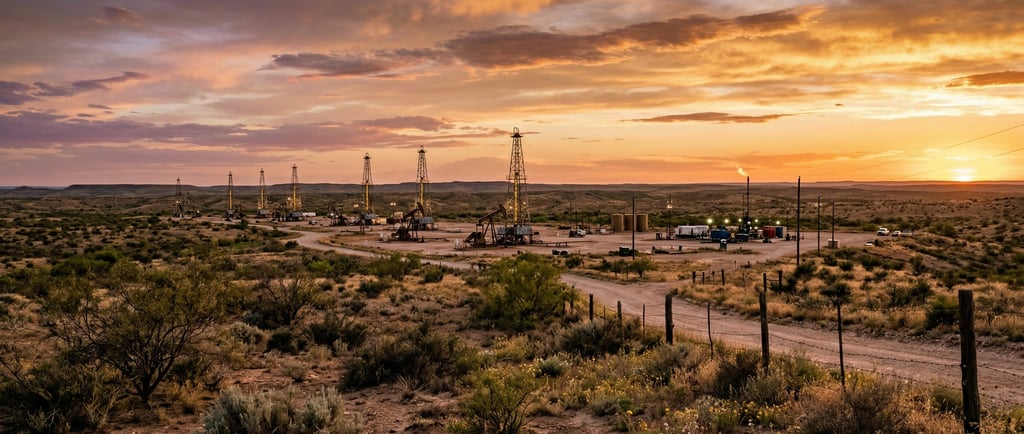
Oil prices are back at it again, doing their usual thing: quietly wreaking havoc on the economy while everyone gets caught up in all sorts of other discussions.
When crude oil starts inching toward a hundred bucks a barrel, it’s not just about energy anymore—it’s all about inflation, the cost of living, and eventually, you guessed it, a possible recession. And whether folks like it or not, we’ve been here before. The warning signs are all too familiar. What’s different this time is how fragile everything feels.
Interestingly enough, one of the best explanations for why high oil prices can be so harmful isn’t coming from Wall Street or Washington, but from a fictional landman from West Texas on Paramount+.
Why Oil Prices Matter
Even after years of talking about moving away from oil, it’s still a crucial part of the global economy. Just about every industry—transportation, manufacturing, agriculture, you name it—relies heavily on crude oil prices.
When oil prices shoot up, costs don’t just rise in a vacuum. It all snowballs. Fuel gets pricier, shipping costs jump, and producing goods becomes more expensive. Those increased costs are passed down to consumers. And guess what? Inflation rears its ugly head.
That’s why you’ve seen recent surges in crude oil prices—thanks to geopolitical instability and supply issues—hit our wallets so fast at the pump.
This is also why a clip from Landman has gone viral again. In it, Tommy Norris lays it on the line, explaining the tight range where oil prices can sit without throwing the whole system off balance.
“You want oil to chill above $60, but below $90… If it hits $100, everything in America has to rethink its pricing.”
And it's not just hype. It’s real economics.
When Oil Goes Too High, Inflation Hits Hard
There’s this dangerous myth floating around 1600 Pennsylvania Ave. that higher oil prices are “good” for the economy because producers rake in more cash. But this overlooks who really ends up paying the bill.
Once oil peaks past a certain point, inflation stops being something abstract and becomes a personal issue. Groceries get more expensive. Construction slows down. Small businesses start feeling the squeeze. Wages lag behind all these rising costs.
As Norris puts it in Landman:
“When gas prices shoot over $3.50 a gallon, it really starts to sting.”
That “sting” is something millions of Americans know all too well. Recent news shows national gas prices hanging around $4 a gallon, a point that historically leads to consumer cutbacks and greater economic stress.
The harsh reality is that oil-driven inflation is fast, brutal, and unyielding. There’s no gentle way into it.
Volatility: The Real Villain
High oil prices are bad news. But volatile oil prices are even worse.
These boom-and-bust cycles shake whole regions, ruin long-term investment plans, and leave workers vulnerable when prices inevitably crash. Landman digs into this cycle, pointing out that after a price spike, you get the “bust”—when companies start cutting jobs, drilling halts, and communities are left high and dry.
This rollercoaster of volatility doesn’t just affect oil workers. It impacts us all. Businesses put off expansion plans. Consumers tend to spend less. Financial markets tighten up. The economy slows down—sometimes it even grinds to a halt.
And once things start to go south, it’s tough to get the ball rolling again.
The Myth of an Easy Switch from Oil
Another tough reality Landman makes us face is how dependent our modern lives still are on oil. Even renewable energy systems rely a lot on petroleum for materials, transport, and maintenance. There’s no on-off switch for oil without some fallout.
Which means oil shortages or long-term high prices don’t come with simple alternatives. The system doesn’t just bend; it breaks.
That’s why energy experts have pointed out that prices above $100 per barrel send shockwaves throughout the whole economy, not just in the energy sector.
So, How Bad Is It Really?
Here’s the straightforward answer: if oil prices stay high, things are going to get worse—and fast.
Consumers will pull back on spending. Inflation will tighten its grip. Central banks will clamp down and we know someone in D.C. who has an irrational hate for the head of this country's central bank. Economic growth will slow down. Eventually, something has to give. History shows that long stretches of high energy prices often lead to recessions.
What makes this current situation really risky is that it’s layered over existing pressures: high interest rates, stretched household budgets, and a closed Straight of Hormuz.
That’s why the Landman speech hits home. It cuts through the noise and reminds us that oil doesn’t care about opinions. It responds to physics, logistics, and price.
As Tommy Norris points out, there’s a delicate sweet spot where oil works for everyone. Outside of that zone, someone always ends up paying—and it’s rarely the folks at the top.
Final Thoughts: Be Careful Ignoring Oil
You don’t have to be on board with Landman’s views to see its main message. The price of oil isn’t just another number—it’s a stress test for our entire economy.
When crude prices soar too high, inflation tags along. And when oil swings wildly, uncertainty freezes everything in between.
Right now, oil prices are sending out a stark message: we’re closer to the edge than we’d like to think.
Ignoring that warning won’t make it disappear.
Contact
Questions or thoughts? Email us or comment to the posts.
© 2026. All rights reserved.