
We All Watched It Together
What September 11th actually felt like — written for the people who weren't there yet.
9/11/202613 min read


You already know what happened. Nineteen men hijacked four airplanes. Two hit the World Trade Center, one hit the Pentagon, and one went down in a field in Pennsylvania. 2,977 people died. It started a war that lasted twenty years.
That's the history. You can get that from a textbook in about four minutes.
What a textbook can't give you is what it felt like. And twenty-five years on, I've started to think that's the part actually worth handing down — because the feeling is what changed the country, not the facts.
So let me try.
We were all in the same room
Here's the first thing that's almost impossible to explain now: nobody watched it alone, and nobody watched it on a phone.
In 2001, a cell phone was a thing you made calls on. There was no video on it. There was no Twitter, no TikTok, no group chat, no push alert, no livestream. If you wanted to know what was happening in the world at 9:03 in the morning, you had to find a television — and televisions were in specific, shared, physical places. A conference room. A break room. A bar. An electronics store window with twelve screens in it, all showing the same thing, with a crowd on the sidewalk.
So that's what happened everywhere in America that morning. People got up from their desks and found the nearest TV and stood there. Shoulder to shoulder. Strangers. Nobody sat down. Nobody had their head down looking at a small screen in their hand, having their own private version of the event.
I was at work in a Boston suburb. We crowded around a set that had been rolled into a conference room, thirty or forty of us, and we watched the second plane hit the South Tower live. Together. In one room. At the same instant.
I want you to sit with that difference for a second, because I think it's the whole thing.
Today, when something terrible happens, we each experience it individually — on our own device, through our own algorithm, in our own feed, with our own commentary attached. We fragment. On September 11th, we couldn't fragment. We were physically stuck next to each other, watching the exact same pictures, with the exact same information, at the exact same moment, and nobody in the room knew any more than anybody else did.
It was a collective trauma. Emphasis on collective.
The office was different then
There was also no such thing as working from home — not really. Almost nobody did it. Which meant your coworkers weren't people you saw in a video window twice a week. They were people you sat five feet from every day for years. You knew their kids' names. You knew what they had for lunch. Those relationships were closer than office relationships tend to be now, and it mattered enormously that day, because when everything came apart, you came apart in front of people who actually knew you.
I'll give you one image and then I'll move on.
A woman I worked with had a sibling who worked in one of the towers.
She stood in that room and watched with the rest of us. For hours. Not knowing.
There was no text message to send. There was no "read receipt." Cell networks in the Northeast were overwhelmed and mostly useless. You could not look anything up. All you could do was stand in a room with people you worked with and stare at a television and wait.
That's what the day was. Standing and waiting.
We thought fifteen thousand people had died
Here's something nobody tells you about that week: we had the number catastrophically wrong, and we believed the wrong number for a long time.
The towers held something like 14,000 to 19,000 people on a normal workday. Both of them had collapsed on live television. So the arithmetic everyone was doing in their heads — and the arithmetic being done out loud on every network — landed somewhere between 10,000 and 20,000 dead. That's what we were being told. That's what we went to bed believing on September 11th, and the 12th, and for days after.
The real number, 2,977, is a staggering, almost unbearable number. But it arrived slowly, over weeks, as a kind of terrible mercy — because we had spent that time bracing for something five times worse.
I don't know how to describe the mental state of those first days except to say it wasn't grief yet. Grief came later. That week was numbness. Awe, in the old sense of the word — the sense that includes dread. You'd catch yourself just standing in your kitchen not doing anything.
What is just as staggering is that now, 25 years later, more people have died from 9/11 related illnesses than died on one of the worst days in American history.
The part that is still difficult to think of
The live coverage showed people jumping.
They weren't jumping to die. They were choosing not to burn. Somewhere between 100 and 200 people went out of those windows, most of them from the North Tower, and for a while that morning the networks were carrying it live because nobody had time to decide not to.
The networks stopped showing it, eventually. But it was live. It was broadcast. It went out.
Which means somewhere in America, there were people sitting in front of a television who recognized what they were looking at.
Imagine that for one second, and then stop, because it's not a thing you can hold for longer than that. Imagine seeing a shape on a screen, from a great distance, in a shirt you recognize.
That's the piece of September 11th that never got smaller for me.
Boston carried something extra
Both planes that hit New York took off from Logan Airport. Ours. Fifteen minutes from where I sat.
That did something strange to this city. There was grief, obviously, and fear. But underneath it there was a low, persistent, irrational shame. It came out sideways in conversations for months — they were here, they walked through our terminal, they went through our security, and we let them get on. Nobody in Boston was responsible for what happened. Everybody in Boston felt a little bit responsible anyway.
If you want to know how close it came to being a matter of chance, consider a pilot named Steve Scheibner.
On September 10th, Scheibner — a Navy pilot flying for American Airlines — put in for the first officer's seat on Flight 11, Boston to Los Angeles. He got it. There was a thirty-minute window in which a more senior pilot could take it from him. He waited for the confirmation call.
It never came. A pilot named Tom McGuinness had bumped him.
Scheibner spent the next day watching the news like everyone else. That evening, he logged into the airline's crew website — the same screen he'd been looking at the day before — and where his name had been, the system now read: "sequence failed continuity."
Airline code for the flight did not reach its destination.
Tom McGuinness sat in the seat Steve Scheibner had bid on, and died in it. That's not a story about fate or luck. It's a story about how thin the membrane was between the people who died that day and the people who didn't.

The sky was empty
By early afternoon, they sent us home.
Every commercial aircraft in American airspace had been ordered down — the first time in history that had ever happened. More than four thousand aircraft were in the air when the order went out at 9:42, and the sky was clear by 12:16.
I drove home under a sky that had nothing in it.
If you've lived your whole life near a major city, you have never once looked up and seen a genuinely empty sky, and you don't realize how much motion is normally up there until it's gone. It was a bright, perfect, cloudless September day in New England — the kind of day people move here for — and it was completely silent overhead.
Except for two fighter jets, circling Boston.
Around and around, all afternoon. Over my city. That was the moment it stopped being a news event and became something else. Combat air patrol over Boston, Massachusetts.
I have never forgotten what that sounded like.
The email
I want to tell you about my own small piece of it, because I think the small pieces are how this actually reaches people.
I worked in financial services. Retirement plans — recordkeeping, processing, the deeply unglamorous machinery of other people's retirements. One of the plans I was responsible for belonged to an airline.
Early the afternoon of 9/11, I got an email from my contact there.
It asked me to place holds on the accounts of the crew members who had been on the planes.
That's all it was. A routine administrative instruction, written in the flat language these things are always written in. Put a hold on these accounts. Here are the names.
I had done that task a hundreds times. It's the thing you do when somebody dies. And I sat there looking at a list of names of people who had been at work that morning, doing their jobs, and I understood for the first time that this thing on television had a paperwork layer, and that the paperwork was going to go on for years, and that somewhere a person was going to have to make a phone call about each one of these.
Most of the financial services industry in Boston essentially stopped for a week. The markets were closed until the 17th. People came in, or didn't, and mostly watched television. That's what we did for days — there was 24-hour coverage on every network and every cable channel, running continuously for weeks, and we watched all of it. It was all-consuming in a way I'd never experienced before and haven't since. There was nothing else on. There was nothing else.
Nobody could go anywhere
Small thing, but it tells you something about how completely the country seized up.
I had a client in town that week. His flight home was cancelled, and so was the next one, and the one after that, and nobody could tell him when there'd be another.
So he rented a car and drove from Boston to Minneapolis.
He was one of thousands. For about a week, America was a country where, if you needed to get somewhere, you drove — and the highways were full of people driving eight, twelve, twenty hours across the continent to get home, because the sky was closed.
Two things we held onto
Pennsylvania. As the story of Flight 93 came out — that the passengers and crew had learned, on airphones, what had already happened in New York, and had made a collective decision, and had gone at the cockpit door — something shifted. The 9/11 Commission concluded it was about twenty minutes' flying time from Washington, and that the most likely target was the Capitol building. It went into a field in Shanksville instead, because a few dozen ordinary people on a Tuesday morning worked out what was happening and decided, in the handful of minutes they had, that they were going to fight.
They were the first Americans to fight back in that war, and they did it before anyone had even named the war, and they didn't have the option of winning. I don't know a cleaner definition of courage than that.
The red bandana. Welles Crowther was 24 years old. He was an equities trader at Sandler O'Neill, on the 104th floor of the South Tower — which is to say he was one of us, a young guy in financial services, the kind of person I worked alongside every day.
He had also been a volunteer firefighter back home in Nyack, New York. As a boy, his father had given him a red bandana to keep in his back pocket. He carried one his whole life; he kept it folded on his desk at work.
When the plane hit his tower, Crowther went down to the 78th-floor sky lobby, which was full of injured and disoriented people, and then he did something extraordinary: he took charge. He found the one usable stairwell. He carried a woman down on his back. He put out fires. He got a group out — and then he climbed back up. And then he did it again.
As many as eighteen people got out of the South Tower because of him. He was 24. He died there; his remains were found months later, with firefighters, in the lobby.
Nobody knew who he was for almost a year. Survivors kept describing a young man with a red cloth over his face who told them where to go. His mother, Alison, read one of those accounts in the New York Times and knew instantly it was her son.
He had once said of it: "With this red bandanna, I'm going to change the world."

Then came the funerals
343 FDNY. 37 Port Authority Police. 23 NYPD. Eleven more officers from other agencies.
Understand what that means logistically: for months afterward, the FDNY was burying people constantly. Multiple funerals a day, some days. Firehouses that had lost most of a shift. Departments from all over the country sending honor guards because New York simply did not have enough people left to do it.
And that was just the uniformed dead. Every town in the Northeast had its own. Boston lost people on the planes. Around here — this close to New York — the phrase you heard over and over was some version of I know someone. Everybody either knew somebody who died, or knew somebody who knew somebody. There was no more than two degrees of separation anywhere in this part of the country. The stories kept surfacing for months: someone's cousin, someone's college roommate, the guy who used to work down the hall.
It wasn't only ours, either. That's a thing Americans sometimes forget about our own tragedy: at least 372 people from 102 other countries died in those buildings. The World Trade Center was the most international workplace on earth. The whole world lost people that morning.
What actually changed
Here's the part I most want you to understand.
Before September 11th, Americans had a deep and largely unexamined belief that this could not happen here. Two oceans. Nobody had attacked the mainland in living memory. The wars were always somewhere else, and we watched them on television, and then we went to dinner. There was an assumption of invulnerability so baked into the culture that most people didn't even know they held it.
That ended at 9:03 in the morning.
My father's generation had a date like that. December 7th, 1941. For them there was a before Pearl Harbor and an after Pearl Harbor, and they'd tell you exactly where they were standing when they heard, and the sentence they always used was some version of "everything was different after that." As a kid I nodded politely and didn't really get it.
I get it now. September 11th was ours. There is a pre-9/11 world and a post-9/11 world, and the people who lived in the first one can't fully explain it to the people who only ever lived in the second — same as my father couldn't explain his to me.
And like Pearl Harbor, it sent people to the recruiting office. Enlistment felt like an obvious thing to do that fall. There was a surge of military pride, a lot of it fueled by plain anger — a desire to go get them, whoever exactly them turned out to be. That impulse was honest and it was also, in retrospect, the beginning of twenty years of complicated consequences. Both of those things are true.
The other change: for about six months, this was one country.
I'm not romanticizing it. It was fear that did it, not virtue. But flags went up on every house on my street. People let each other merge in traffic. Congress stood on the Capitol steps and sang. Strangers talked to each other in checkout lines. For a brief window we all agreed on the basic facts of what had happened, and we all agreed we were on the same side.
We do not have that anymore. Not remotely. We have sorted ourselves into camps that can't even agree on what occurred, let alone what to do about it, and every event now gets absorbed into somebody's argument within about ninety minutes. I understand why. I still think losing it was a real loss, and I'd like you to know that a version of this country existed, however briefly, so you know it's possible.
Where you come in
Around 108 children were in utero on September 11th, 2001 — babies whose fathers died before they were born. There's a documentary called Generation 9/11 that followed a group of them through their first twenty years: their first day of school, the first time the absence really landed, the moment each of them found out exactly how their father died.
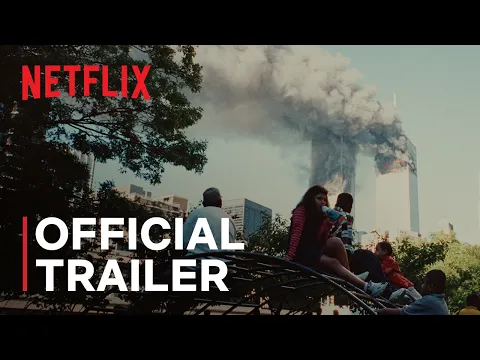
Those kids are in their mid-twenties now. Some of them have children of their own.
If you're reading this and you weren't born yet, or you were too small to remember, I don't think that puts you outside of this. I think it puts you inside it in a way you may not have considered — because you grew up entirely inside the world this made. Security theater at the airport. Bag checks at the ballpark. Bollards outside every public building. Two decades of war running in the background of your childhood like a screensaver. An ambient, permanent, low-grade anxiety about crowds and public spaces that people my age were not raised with and had to learn.
That's not history. That's your normal. It just has a start date, and this is it.
The jumpers and the climbers
And you have your own footage.
August 2021. Kabul. The U.S. withdrawal from Afghanistan — the war that started here, ending there. A C-17 taking off from the airport with hundreds of desperate people running alongside it, and some of them clinging to the outside of the aircraft, and then the pictures nobody who saw them will ever unsee: shapes coming off the fuselage as the plane climbed away.
Ten days later, a suicide bomber at Abbey Gate killed thirteen American service members and roughly 170 Afghan civilians.
You remember where you were for that. You remember how it felt to watch it.
I watched it too, and here's what I couldn't stop thinking: the jumpers were the beginning of the war on terror, and the climbers were the end of it. Same posture. Same impossible choice. Same helpless people falling out of the sky in front of a camera, twenty years apart, at the two ends of the same story.
You're not outside this. You saw the last chapter. I saw the first one. We're looking at the same thing from opposite ends.
What I'd ask
Not that you observe a moment of silence. You'll do that or you won't.
What I'd ask is this: the next time something terrible happens and you find out about it on your phone, alone, scrolling — notice that. Notice that you're processing it by yourself, sorted into a feed built for you, with commentary already attached telling you who to blame.
We didn't have that. We had a conference room and a television and forty people and no information and each other.
I'm not going to pretend the old way was better in every respect. It was slower and we got the numbers spectacularly wrong for a week. But there was something in being physically next to other people while the worst thing you'd ever seen was happening — something that made it ours instead of mine — and I don't think we've found a replacement for it.
That's the part I'd hand you, if I could hand you one thing.
We all watched it together. It's the only reason any of us got through it.
If you want to go further than this post, three films are worth your time: The Man in the Red Bandana (ESPN's thirteen-minute E:60 piece on Welles Crowther), In My Seat: A Pilot's Story from Sept 10th–11th (Captain Steve Scheibner's), and Generation 9/11 (PBS, 2021 — the children born after their fathers died). Between them they cover the three things I can't quite put into words here: what people were capable of that day, how arbitrary it was who lived, and what it cost the ones who are still paying.
Contact
Questions or thoughts? Email us or comment to the posts.
© 2026. All rights reserved.