
Why John Henry Must Sell the Boston Red Sox
4/27/20265 min read
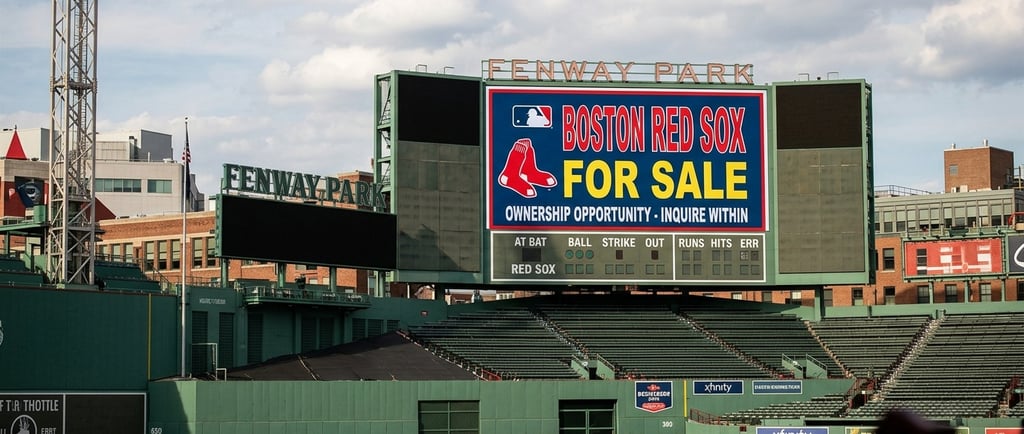
The silence following the crack of a bat at Fenway Park used to be a sign of tension—a city holding its collective breath before a ball cleared the Monster. Today, the silence is different. It is the hollow, ringing quiet of a divorce.
Yesterday, April 25, 2026, Fenway Sports Group (FSG) performed its final act of cowardice in a decade defined by it: they fired Alex Cora. After a 10-17 start that everyone from the Fens to the Berkshires saw coming, the man who steered this ship through the 2018 storm was tossed overboard to distract the sharks. But the sharks aren't interested in the manager anymore. They’re looking at the owners' box.
John Henry was a hero when he stood on the grass in St. Louis in 2004—a literal quantitative revolutionary who broke the curse and promised a generation of dominance. But today, the man who brought "The Idiots" to glory has become the very thing he once defeated: an absentee landlord presiding over a crumbling estate.
It is time. John Henry, Tom Werner, and FSG must sell the Boston Red Sox. The "civic trust" they once claimed to uphold has been liquidated for parts.
The Scapegoat and the Hollow Core
Firing Alex Cora after 27 games is a masterpiece of gaslighting. You cannot give a master chef a bag of expired flour and a rusted whisk and then fire him when the souffle collapses. Cora wasn’t the problem; he was the last remaining shield for an ownership group that has treated the roster like a tax-loss carryforward.
Look at the field. Or rather, look at who isn't on it. In 2025, we watched the unthinkable: the trade of Rafael Devers. After years of being told Raffy was the "Third Base Cornerstone," FSG blinked at the escalating market and shipped the heartbeat of the franchise away for "flexibility" and "prospect depth."
Then came the Alex Bregman insult. To quiet the masses, they brought Bregman in on what amounted to a one-year PR stunt. When he realized the "commitment to winning" was a PowerPoint slide rather than a payroll strategy, he walked. Seeing him in a Cubs uniform this spring, hitting home runs in a market that actually values its stars, was a dagger to the heart of the Fenway faithful. We are no longer the destination; we are the layover.
The $5 Billion Slumlord
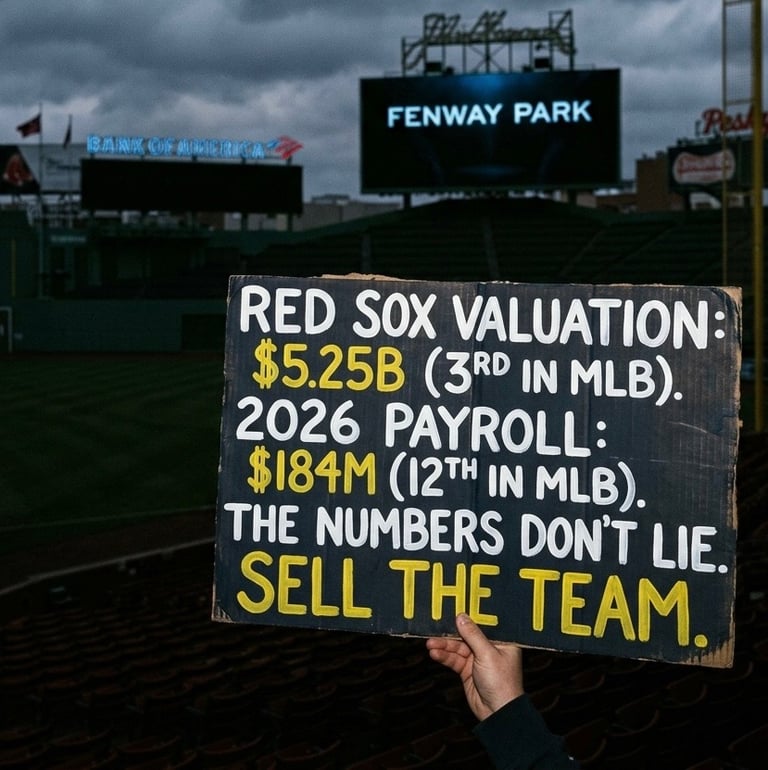
The math of modern baseball in Boston is a slap in the face to every person paying $15 for a beer and $150 for a grandstand seat. According to the latest valuations, the Boston Red Sox are worth roughly $5.25 billion, ranking third in Major League Baseball.
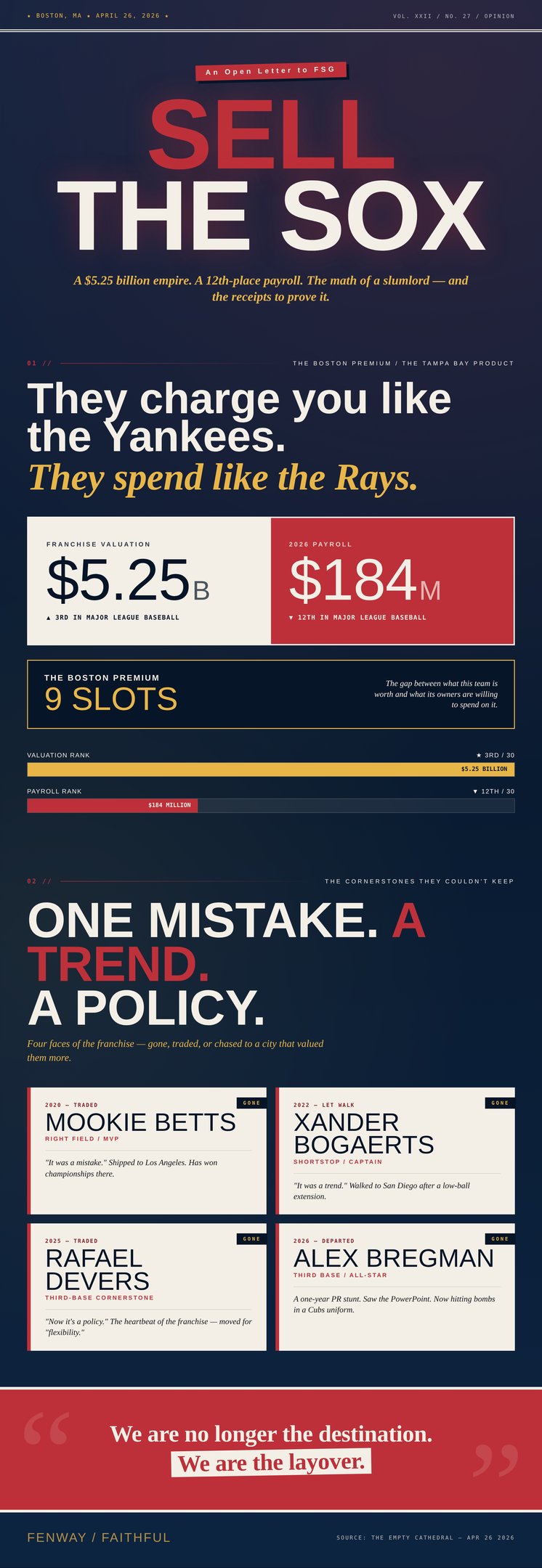
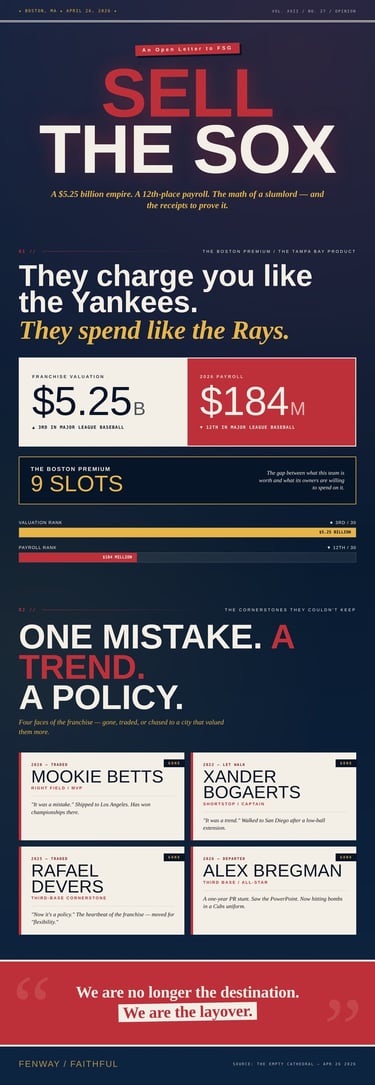
Yet, as we sit here in April 2026, the team’s payroll has shriveled to $184 million. We are 12th in the league. We are being outspent by mid-market teams that John Henry used to view as rounding errors. FSG is pocketing the "Boston Premium" while delivering a "Tampa Bay Budget" product.
They tell us about "sustainability." They tell us about the "luxury tax." We tell them that we don't care about their EBITDA. We care about the product on the dirt. When Mookie Betts was traded, it was a mistake. When Xander Bogaerts was let go, it was a trend. Now, with Devers gone and the payroll stagnating, it is a policy. The Red Sox are no longer a baseball team; they are a diversified asset in a global portfolio that includes English soccer, NASCAR, and a future NBA expansion team in Las Vegas. Don’t forget about the $1.8B in cash they will get from the Penguins sale.
The Soul for Sale
If you want to know how little FSG cares about the "Red Sox Brand," look no further than the Team Store on Jersey Street. Earlier this month, fans were greeted by the sight of New York Yankees merchandise prominently displayed for sale.
In the 125-year history of this rivalry, that is the ultimate surrender. It is an admission that to FSG, the rivalry isn't a blood feud; it’s a "cross-promotional revenue opportunity." They would sell pinstripes in the shadow of the Green Monster if it meant an extra three percent on the quarterly earnings report. It is a betrayal of the identity of this city.
The fans have reached their breaking point. This isn't the polite grumbling of the 2010s. The "Sell the Team" chants that have echoed through Fenway during this April home stand—against the Yankees, Tigers, Brewers, and Padres—have been visceral. They are the screams of a fanbase that feels gaslit by an ownership group that refuses to speak to them, hiding instead behind "Chief Baseball Officers" who are hired to be the public face of the next salary dump.
A Global Crisis of Confidence
This isn't just a Boston problem; it’s a
Fenway Sports Group problem. While Fenway was chanting for a sale, 3,000 miles away at Anfield, the fans of Liverpool FC were doing the same.
Yesterday, April 25, 75,000 Liverpool supporters held up yellow cards in a coordinated "Yellow Card" protest against FSG. The chants of "You greedy bastards" echoed across the Mersey, a response to ticket price hikes and a perceived lack of investment in the squad.
The parallels are damning. Whether it’s the bleachers in Boston or the Kop in Liverpool, the sentiment is identical: FSG has lost the locker room and the grandstands. They are globalists in a business that requires local passion. They treat historic franchises like ATMs, withdrawing the equity of tradition to fund their next acquisition.
The Path Forward: Bringing the Sox Home
The Red Sox are a civic institution. They belong to the Commonwealth. For twenty years, John Henry was a worthy steward of that trust. But he has checked out. He is a ghost in his own ballpark, more interested in golf and European Super Leagues than whether his team can find a reliable number-two starter.
Boston doesn't need "global synergy."
Boston needs an owner who views a World Series trophy as the only acceptable ROI.
We need local, legacy-minded leadership. The rumors of the Johnson family of Fidelity Investments exploring a bid are more than just sports talk radio fodder; they are a beacon of hope. A group led by the Johnsons—individuals with deep Massachusetts roots and the capital to make $184 million look like a spring training budget—would return the Red Sox to their rightful place as a premier franchise.
We need an owner who would rather lose money winning a championship than make a profit finishing third in the AL East. We need an owner who understands that you never, ever sell Yankee gear at Fenway.
John, it’s been a long run. You gave us 2004, 2007, 2013, and 2018. We will always have the parades. But your vision for this team has become a nightmare for its fans. You have the billions; now, give us back our soul.
Sell the team. Before there’s nothing left to save.
Audio
Podcast
Contact
Questions or thoughts? Email us or comment to the posts.
© 2026. All rights reserved.